
The traditional boundary between entertainment and academia is being dismantled by an ambitious new project from Bravery Pictures. Their latest psychological feature, Call Me Nothing, is not merely seeking box office success; it is positioning itself as a rigorous, hands-on learning environment for mental health professionals worldwide. By inviting psychiatrists, forensic psychologists, and trauma specialists to join its Clinical Review Board, the production is turning the act of film viewing into a verifiable continuing education (CE) opportunity.
This initiative, described by many early participants as a “blue-sky study,” allows clinicians to engage with a high-stakes narrative while fulfilling the practical requirements for license maintenance. In an era where media portrayals of mental illness are often criticized for inaccuracy, Call Me Nothing is setting a new standard by inviting the medical community to peer-review its portrayal of complex pathologies.
A New Paradigm for Continuing Education (CE)
For most clinicians, earning Continuing Education (CE) or Continuing Professional Development (CPD) hours involves dry seminars or repetitive online modules. Bravery Pictures is offering a more visceral alternative. The program is structured to map directly onto the self-directed learning and pro-bono consultation requirements mandated by many global licensing boards.
Why the medical community is responding with such enthusiasm:
- Clinical Authenticity over Sensationalism: The film is “picture-locked,” meaning the visuals are final. Clinicians aren’t just giving creative notes; they are reviewing a completed diagnostic environment to see if the “internal architecture” of the protagonist holds up under the lens of the DSM-5 and ICD-11.
- Documentation for Licensing: This isn’t just a “thank you” credit. The program provides a structured plan, measurable hours of engagement, and a formal signed certificate—the exact documentation required for annual license renewals.
- Global Collaborative Network: The Review Board isn’t an isolated effort. Experts from North America, Europe, Asia, and Latin America are comparing notes, creating a cross-cultural consensus on how trauma-driven psychosis is understood and depicted.
- Educational Legacy: The feedback gathered won’t just sit in a file. It will be anonymized and aggregated into a comprehensive Consensus Report intended for use in university grand rounds and trauma-informed training programs.
The Case Study: The Fractured Mind of Amaris Everheart
At the heart of the film—and the clinical review—is the character of Amaris Everheart. Unlike many films that focus on the “spectacle” of a crime, Call Me Nothing chooses to examine the aftermath. Amaris is a woman whose childhood was defined by a kidnapping; as an adult, her mind has rebuilt itself through a complex lattice of fractured memory, internal voices, and command hallucinations.
Participating clinicians are tasked with reviewing the film alongside a fictionalized clinical dossier and “recovered” cassette-tape transcripts. The goal is to determine if the portrayal of her dissociation and psychosis is clinically consistent. By treating the protagonist as a “virtual patient,” the project becomes a unique training tool for identifying the nuances of trauma-driven survival mechanisms.
Pathways to Participation
To accommodate the varying schedules and interests of the medical community, Bravery Pictures has established a three-tiered participation structure. Each level offers a different depth of involvement and professional recognition:
| Tier | Designation | Clinical Scope | Professional Benefits |
| Tier 1 | Associate | Review the first 30 minutes; complete a DSM-5/ICD-11 diagnostic checklist. | Certificate of participation and on-screen film credit. |
| Tier 2 | Consultant | Private full-feature screener; full script access; advanced evaluation tools. | Premium on-screen credit and official IMDb listing. |
| Tier 3 | Brand Partner | Deep strategic partnership and priority visibility (limited availability). | Option to voice a consulting doctor within the film’s diegetic audio. |
Note on Ethics: All participation is governed by strict confidentiality. While the dossier is inspired by real-world psychological phenomena, it is a fictionalized construct. No real patient records are used, and all participants must sign a Non-Disclosure Agreement (NDA) to protect the film’s pre-release integrity.
The Impact on Forensic and Neuropsychiatric Training
The roster of those already signed up reads like a “who’s who” of the forensic world: senior forensic consultants, child protection specialists, and neuropsychiatrists. Their goal is to ensure that the film serves as a bridge between the clinical office and the public’s understanding of mental health.
By participating, these experts are ensuring that Call Me Nothing doesn’t just entertain, but educates. The resulting Consensus Report will provide a rare look at how a diverse group of experts interprets the same “patient” (Amaris), offering a fascinating look at diagnostic variability and agreement in the field of trauma.
How to Register
Spots for the pre-release review cycle are strictly limited to ensure the quality of the aggregated report. Clinicians interested in a unique, CE-friendly experience that blends the art of cinema with the rigor of clinical science are encouraged to apply via the Call Me Nothing Clinical Review portal.
For further inquiries regarding the board or the consensus report, contact hello@braverypictures.com or visit braverypictures.com.

About the author

‘Its Name Was Mormo’ Review: Fear-filled Hearts & Close Encounters
In Mark Bower’s staggering handmade visionary tale, his first movie has drawn the attention of nine international film distributors. A Haunting Tale Mark Bower's handmade visionary performance, "Its Name Was Mormo," is a haunting exploration of fear and the supernatural, capturing audiences with its raw and immersive storytelling which delves into the realm of psyche horror, evoking a sense of dread that lingers long after the camera battery dies. Plot and Atmosphere Set in a desolate, rural town, Its Name Was Mormo > follows the unsettling experiences of a family who encounter an evil entity known as Mormo. The film masterfully builds tension through its eerie landscapes, unsettling silence, and the palpable fear of its characters. Bower’s attention to detail in creating a chilling atmosphere is evident, as each scene is infused with an impending sense of doom. The narrative is […]
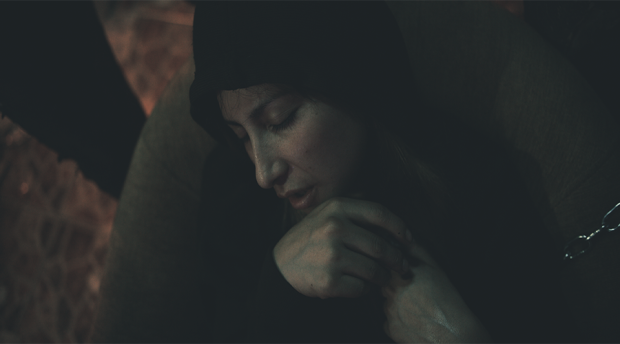
The Architecture of a Shattered Mind: Clinicians Worldwide to Peer-Review Call Me Nothing
In an unprecedented intersection of cinematic storytelling and psychiatric rigor, Bravery Pictures has officially launched an international Clinical Review Board for its upcoming feature, Call Me Nothing. Moving beyond the typical "medical consultant" role, the production is inviting a global cohort of experts to treat the film as a living clinical laboratory—offering a unique "blue-sky study" path for practitioners to maintain their professional licenses while shaping the narrative of mental health on screen. Beyond the Screen: The Case of Amaris Everheart Call Me Nothing eschews the traditional tropes of the abduction thriller. Rather than focusing on the crime itself, the film interrogates the deep-tissue psychological aftermath. The narrative centers on Amaris Everheart, a survivor of early-childhood kidnapping who, as an adult, suffers a catastrophic psychotic break leading to spousal homicide. The film serves as a reconstruction of her "interior cage," […]
Bridging Cinema and Science: How Call Me Nothing is Transforming Film into a Global Clinical Laboratory
The traditional boundary between entertainment and academia is being dismantled by an ambitious new project from Bravery Pictures. Their latest psychological feature, Call Me Nothing, is not merely seeking box office success; it is positioning itself as a rigorous, hands-on learning environment for mental health professionals worldwide. By inviting psychiatrists, forensic psychologists, and trauma specialists to join its Clinical Review Board, the production is turning the act of film viewing into a verifiable continuing education (CE) opportunity. This initiative, described by many early participants as a "blue-sky study," allows clinicians to engage with a high-stakes narrative while fulfilling the practical requirements for license maintenance. In an era where media portrayals of mental illness are often criticized for inaccuracy, Call Me Nothing is setting a new standard by inviting the medical community to peer-review its portrayal of complex pathologies. A New […]

Into the Fog: Everything We Know About Return to Silent Hill
After nearly two decades, the sirens are sounding once again. Return to Silent Hill, the highly anticipated third instalment in the film franchise, is officially set to bring the psychological horror of Konami’s legendary video game series back to the big screen. Directed by Christophe Gans, the visionary behind the original 2006 cult classic, this new entry promises a faithful and terrifying adaptation of the fan-favorite story, Silent Hill 2. https://www.youtube.com/watch?v=fTPHkslPCr0 The Release: A New Nightmare for 2026 While initially expected earlier, the official domestic release date has been set for January 23, 2026. This places the film at the forefront of the year's horror calendar. International audiences in territories like Australia and Brazil can expect to enter the fog a day earlier on January 22, 2026. The Plot: A Journey of Love and Madness The film adapts the narrative […]
Top 10 Console Games: Horror Games You Must Play in 2026
Top 10 Console Games: Horror Games You Must Play in 2026 From legendary remakes to grotesque new nightmares, prepare your PS5 and Xbox Series X for a golden age of terror. The horror genre is currently enjoying a renaissance. We’ve moved past the era of cheap jump-scare YouTube bait and settled into a rich landscape of psychological dread, complex survival mechanics, and narrative-driven terror. For console gamers, the horizon is looking exceptionally grim—in the best way possible. The next 18 months are stacked with titles designed to make you clutch your controller until your knuckles turn white. We are looking at the return of industry titans, ambitious new IPs from legendary creators, and indie darlings making the leap to the big screen. If you’re ready to lose some sleep, here are the top 10 console horror games coming out soon […]
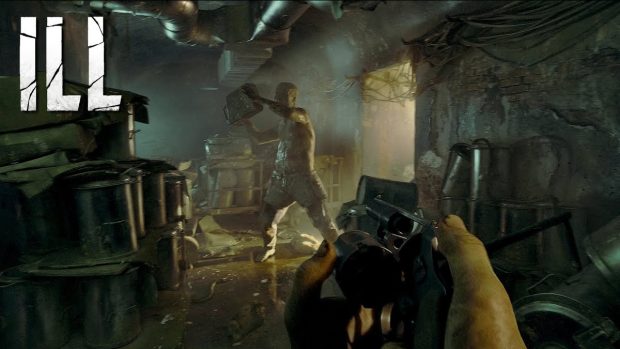
ILL: From Viral Concept to Brutal Reality – Development & Release Update (2026)
For years, the horror game ILL existed in the liminal space between "too good to be true" and "wishlisted immediately." Known for viral clips featuring hyper-realistic dismemberment and flesh-mutating monstrosities, the project faced years of skepticism. The latest ILL Update brings exciting new details to light. The latest ILL Update showcases the game's evolution and development progress. This ILL Update marks a pivotal moment for fans eager for insights. However, recent updates from late 2025 have fundamentally changed the narrative. No longer just a series of glossy animations, ILL has entered full active production with a major publisher backing it. Here is the latest ILL Update on the body-horror title that aims to redefine the genre. 1. Major Publisher Announcement: The Mundfish Partnership In this ILL Update, the focus is on the exciting partnership that influences gameplay. This ILL Update […]
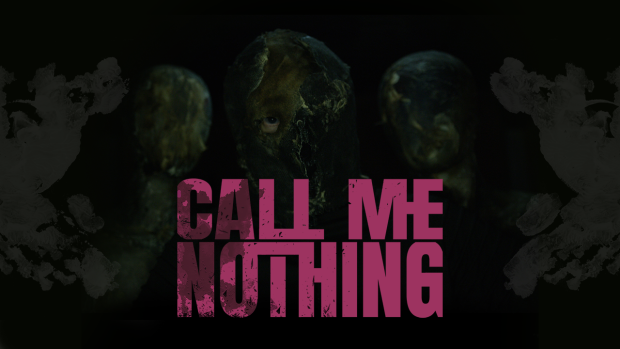
Call Me Nothing: New Psychological Thriller Unmasks Trauma and Mental Health
Call Me Nothing, produced and directed by Mark Andrew Bowers, is digging into the messy, unglamorous corners of the human mind—and inviting the community to join the journey. This gripping psychological thriller uses the Japanese idea of "three faces" as its central motif: the face we show the world, the face we reserve for loved ones, and the face we keep hidden. It’s a gritty, "slow-burn" story about memory, loss, and the fight to reclaim one's identity. A Story of Three Faces Shot in remote forests and abandoned villages, the production has already completed more than 50 days of filming for just the opening twenty minutes. The team, led by Marcela and Mark Bowers, is now live on Indiegogo seeking $300,000 to complete post-production, sound, and global distribution. But this campaign is about more than just finishing a film. It’s […]
Related
The Architecture of a Shattered Mind: Clinicians Worldwide to Peer-Review Call Me Nothing
In an unprecedented intersection of cinematic storytelling and psychiatric rigor, Bravery Pictures has officially launched an international Clinical Review Board for its upcoming feature, Call Me Nothing. Moving beyond the typical "medical consultant" role, the production is inviting a global cohort of experts to treat the film as a living clinical laboratory—offering a unique "blue-sky study" path for practitioners to maintain their professional licenses while shaping the narrative of mental health on screen. Beyond the Screen: The Case of Amaris Everheart Call Me Nothing eschews the traditional tropes of the abduction thriller. Rather than focusing on the crime itself, the film interrogates the deep-tissue psychological aftermath. The narrative centers on Amaris Everheart, a survivor of early-childhood kidnapping who, as an adult, suffers a catastrophic psychotic break leading to spousal homicide. The film serves as a reconstruction of her "interior cage," […]

Sundance Film Festival 2026 Midnight Lineup Brings Bold New Horror Films and Genre-Bending Premieres
The Sundance Film Festival 2026 is shaping up to be an unforgettable event for fans of independent cinema, especially those with a taste for horror, dark comedy, and boundary-pushing storytelling. As the iconic festival prepares for its next edition, organizers have officially revealed the 2026 program slate, and it’s packed with buzzworthy titles that promise sleepless nights and thought-provoking experiences. Taking place January 22 through February 1, 2026, the Sundance Film Festival will once again return in person to Park City, Salt Lake City, and the Sundance Resort, while also offering a curated selection of films online starting January 30. Festival packages and passes are already available through Sundance’s official website, giving cinephiles early access to one of the most influential film festivals in the world. With a strong focus on independent horror films, innovative documentaries, and daring new voices, […]
ILL: From Viral Concept to Brutal Reality – Development & Release Update (2026)
For years, the horror game ILL existed in the liminal space between "too good to be true" and "wishlisted immediately." Known for viral clips featuring hyper-realistic dismemberment and flesh-mutating monstrosities, the project faced years of skepticism. The latest ILL Update brings exciting new details to light. The latest ILL Update showcases the game's evolution and development progress. This ILL Update marks a pivotal moment for fans eager for insights. However, recent updates from late 2025 have fundamentally changed the narrative. No longer just a series of glossy animations, ILL has entered full active production with a major publisher backing it. Here is the latest ILL Update on the body-horror title that aims to redefine the genre. 1. Major Publisher Announcement: The Mundfish Partnership In this ILL Update, the focus is on the exciting partnership that influences gameplay. This ILL Update […]

“The Eyes in the Darkness” Stories of Terror and Suspense
The Eyes in the Darkness of the Room Luis had always been a curious child, full of life and energy. At just eight years old, his world was filled with bright colors, laughter, and games. However, all of that changed one autumn night when the wind howled like a hungry wolf and the leaves fell from the trees as if stripping bare in the face of the cold. That night, as he prepared to sleep, he felt an unsettling presence in his room. The light from his night lamp cast dancing shadows on the walls, and Luis couldn’t help but look into the darkness in the corners, where the warm glow of the light didn’t reach. It was then that he saw them: two bright eyes, like two points of light in the darkness, watching him. He froze, feeling his […]
Get a Welcome Bonus & Play at WinsMania Online
Crash games are gaming options in which players place a bet and watch a multiplier grow. At that point, they will have to cash out before the multiplier crashes or lose their initial bet. As with all bonuses, there are wagering requirements at GameMania. In other words, the bonus money will have to be wagered a certain amount of times before the GameMania bonus withdrawal. Betting App However, the simplicity of bonus structures feel limited to high-stakes users seeking more complex incentives.For those claiming a Winomania Casino no deposit code, it’s important to note that even small incentives, such as £5 or 50 free spins, come with attached conditions.However, the User satisfaction score is only calculated once a casino has 15 or more reviews.You’ll need to upload a copy of your ID (like your national ID or passport) and sometimes […]
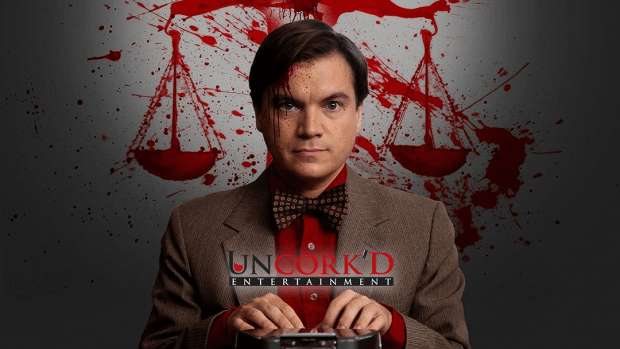
The Success of “Walden” (2023): A Triumph for Uncork’d Entertainment
Introduction to Walden "Walden," a 2023 film adaptation inspired by Henry David Thoreau's seminal work, has made a significant impact in the indie film circuit, thanks largely to the adept promotional and distribution efforts of Uncork'd Entertainment. This article delves into the factors contributing to the film's success and how Uncork'd Entertainment's strategic moves ensured "Walden" reached its intended audience and beyond. The Film: A Modern Adaptation "Walden" reimagines Thoreau's transcendental masterpiece for a contemporary audience. Directed by a visionary filmmaker, the movie encapsulates the themes of self-discovery, solitude, and the intrinsic connection between humanity and nature. The storyline revolves around a modern-day protagonist who, disillusioned by urban life, retreats to a secluded cabin in the woods to find solace and meaning. The film’s cinematography, coupled with a poignant script and compelling performances, evokes the essence of Thoreau’s philosophy while […]