
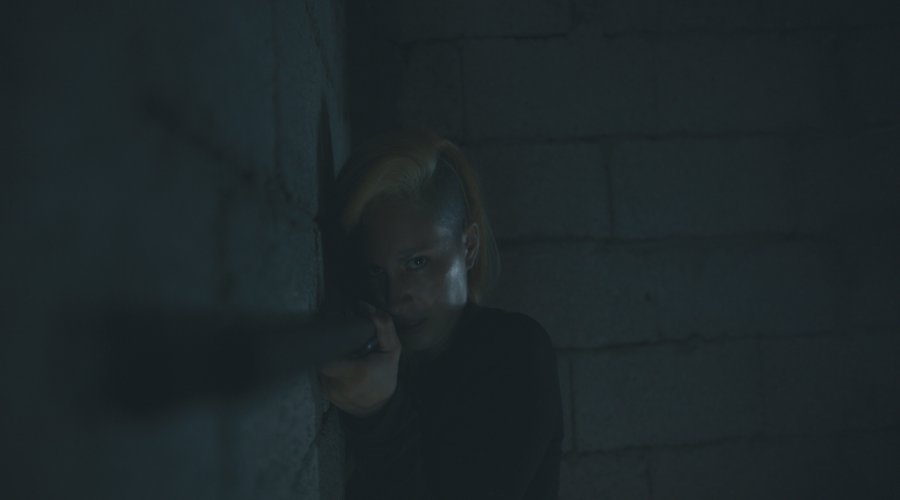

Call Me Nothing, produced and directed by Mark Andrew Bowers, is digging into the messy, unglamorous corners of the human mind—and inviting the community to join the journey.
This gripping psychological thriller uses the Japanese idea of “three faces” as its central motif: the face we show the world, the face we reserve for loved ones, and the face we keep hidden. It’s a gritty, “slow-burn” story about memory, loss, and the fight to reclaim one’s identity.
A Story of Three Faces
Shot in remote forests and abandoned villages, the production has already completed more than 50 days of filming for just the opening twenty minutes. The team, led by Marcela and Mark Bowers, is now live on Indiegogo seeking $300,000 to complete post-production, sound, and global distribution.
But this campaign is about more than just finishing a film. It’s about building an outreach program that connects the film’s themes to real-life struggles with ADHD, depression, and anxiety.
Marcela Cárdenas, who also stars, says the three-face concept was the key to translating complicated inner experiences into images audiences can feel. “We all wear masks,” she says. “But some of us aren’t taught how to take them off safely. Call Me Nothing is about the cost of that silence—and what happens when the third face, the one no one sees, is finally forced into the light.”
From a Raw Idea to a Communal Mission
Mark Bowers, the film’s director, describes the project as both personal and communal. “We started with a small idea in mid‑2024 and let it grow into something raw and relentless. The film is made with love and with anger—love for those who survived, anger at the systems that failed them. We want it to be cinematic, but we also want it to be useful: a mirror for people who feel unseen and a platform where their stories matter.”
The narrative follows Amaris, a woman whose memory is fragmented by trauma. Her search for a lost protector, Lila, becomes a descent through a maze of memories, manipulations, and relived violence. The film uses recurring motifs—a chameleon, a rabbit, cassette tapes, and a coded number—to trace the ways identity is stolen and reclaimed.
Beyond the Age of Reboots: A Call for Authentic Storytelling
In a film landscape dominated by sequels and reboots, audiences are actively searching for groundbreaking original stories. Film industry trends show a clear demand for “authentic storytelling” that reflects real-world dynamics and diverse, complex characters.
Call Me Nothing is a direct answer to that call. It’s not a fantasy; it’s a work of “social realism” wrapped in a thriller’s clothing. It tackles themes of social fragmentation and isolation head-on, focusing on the real human fears and “melancholic memories” that shape us. This is a story for those who crave depth and want to see “authentic representation” of mental health and survival on screen.
A New Thriller for Fans of “Unreliable Narrators”
The psychological thriller genre is more popular than ever, and Call Me Nothing hits all the right notes for fans of “mind-bending” narratives. The film is built around an “unreliable narrator,” as Amaris’s fragmented memory forces the audience to question what is real and what is a construct of her trauma.
This “slow-burn” approach builds suspense through atmosphere and character, not jump scares. It’s a film that explores the “darker side of human nature” and the “mind games” people play, both with others and themselves. If you love films that keep you guessing long after the credits roll, this is a project to watch.
Trauma-Informed Filmmaking: A Focus on Care
Community and care have been central to the production from day one. The young actors were supported with trauma-informed direction and on-set safeguards. Every scene with child performers was rehearsed as a game of trust, ensuring they felt safe, confident, and protected. Crew members were briefed on emotional safety and debriefing protocols after difficult scenes.
That sensitivity extends to the film’s outreach. The Indiegogo campaign pairs cinematic rewards with meaningful access. Backers can download exclusive material, like ten sketches from Amaris’s sketchbook and five diary pages that reveal the character’s private thoughts. Higher-tier rewards include collectible props and immersive items tied to the film’s central symbolism, all designed to deepen the audience’s connection to the story.
Join the ‘Call Me Nothing’ Indiegogo Campaign
The campaign also foregrounds mental health inclusion. “People with ADHD, depression, and anxiety are often sidelined in mainstream narratives,” says Marcela. “We wanted this film to fold those experiences into the very texture of the story—not as labels, but as lived realities. Backers who resonate with those experiences aren’t just donating—they become part of a community that the film speaks for.”
To amplify this, the filmmakers plan a social campaign titled the “Three Masks” challenge: a short series of teasers asking people to reflect on which face they present in public, to friends, and to themselves. The campaign will encourage followers to share brief, stigma-free reflections and use the film’s symbolism as a conversation starter about masking and mental health.
Marcela and Mark emphasize that Call Me Nothing is not a clinical primer. Instead, they position it as a cathartic, empathetic piece of art. “Our priority was never shock for its own sake,” Mark says. “It was honesty. If the film helps someone feel less alone for even a moment, then we’ve done something right.”
Backers will help fund:
Completion of editing, sound design, and color grading.
Original score and licensed music.
Distribution, festival submissions, and promotional campaigns.
Accessibility features and community screenings with moderated talkbacks.
The team hopes to premiere the finished film in early 2026. For anyone interested in contributing to a film that combines art, social relevance, and care, this campaign is an opportunity to help bring voices too often kept in the dark into the light.
Find the project on Indiegogo to view rewards, download exclusive art, and join the conversation about masks, memory, and the hard work of being seen.


About the author

‘Its Name Was Mormo’ Review: Fear-filled Hearts & Close Encounters
In Mark Bower’s staggering handmade visionary tale, his first movie has drawn the attention of nine international film distributors. A Haunting Tale Mark Bower's handmade visionary performance, "Its Name Was Mormo," is a haunting exploration of fear and the supernatural, capturing audiences with its raw and immersive storytelling which delves into the realm of psyche horror, evoking a sense of dread that lingers long after the camera battery dies. Plot and Atmosphere Set in a desolate, rural town, Its Name Was Mormo > follows the unsettling experiences of a family who encounter an evil entity known as Mormo. The film masterfully builds tension through its eerie landscapes, unsettling silence, and the palpable fear of its characters. Bower’s attention to detail in creating a chilling atmosphere is evident, as each scene is infused with an impending sense of doom. The narrative is […]
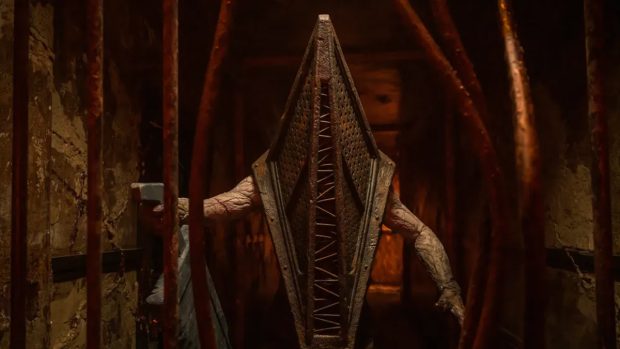
Into the Fog: Everything We Know About Return to Silent Hill
After nearly two decades, the sirens are sounding once again. Return to Silent Hill, the highly anticipated third instalment in the film franchise, is officially set to bring the psychological horror of Konami’s legendary video game series back to the big screen. Directed by Christophe Gans, the visionary behind the original 2006 cult classic, this new entry promises a faithful and terrifying adaptation of the fan-favorite story, Silent Hill 2. https://www.youtube.com/watch?v=fTPHkslPCr0 The Release: A New Nightmare for 2026 While initially expected earlier, the official domestic release date has been set for January 23, 2026. This places the film at the forefront of the year's horror calendar. International audiences in territories like Australia and Brazil can expect to enter the fog a day earlier on January 22, 2026. The Plot: A Journey of Love and Madness The film adapts the narrative […]

Top 10 Console Games: Horror Games You Must Play in 2026
Top 10 Console Games: Horror Games You Must Play in 2026 From legendary remakes to grotesque new nightmares, prepare your PS5 and Xbox Series X for a golden age of terror. The horror genre is currently enjoying a renaissance. We’ve moved past the era of cheap jump-scare YouTube bait and settled into a rich landscape of psychological dread, complex survival mechanics, and narrative-driven terror. For console gamers, the horizon is looking exceptionally grim—in the best way possible. The next 18 months are stacked with titles designed to make you clutch your controller until your knuckles turn white. We are looking at the return of industry titans, ambitious new IPs from legendary creators, and indie darlings making the leap to the big screen. If you’re ready to lose some sleep, here are the top 10 console horror games coming out soon […]
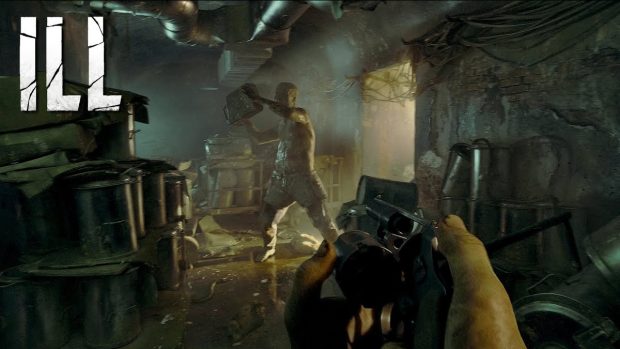
ILL: From Viral Concept to Brutal Reality – Development & Release Update (2026)
For years, the horror game ILL existed in the liminal space between "too good to be true" and "wishlisted immediately." Known for viral clips featuring hyper-realistic dismemberment and flesh-mutating monstrosities, the project faced years of skepticism. The latest ILL Update brings exciting new details to light. The latest ILL Update showcases the game's evolution and development progress. This ILL Update marks a pivotal moment for fans eager for insights. However, recent updates from late 2025 have fundamentally changed the narrative. No longer just a series of glossy animations, ILL has entered full active production with a major publisher backing it. Here is the latest ILL Update on the body-horror title that aims to redefine the genre. 1. Major Publisher Announcement: The Mundfish Partnership In this ILL Update, the focus is on the exciting partnership that influences gameplay. This ILL Update […]
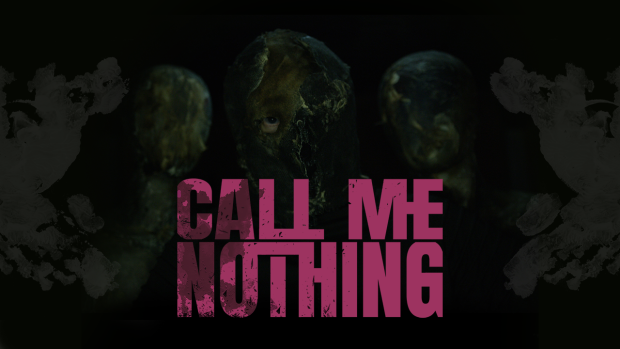
Call Me Nothing: New Psychological Thriller Unmasks Trauma and Mental Health
Call Me Nothing, produced and directed by Mark Andrew Bowers, is digging into the messy, unglamorous corners of the human mind—and inviting the community to join the journey. This gripping psychological thriller uses the Japanese idea of "three faces" as its central motif: the face we show the world, the face we reserve for loved ones, and the face we keep hidden. It’s a gritty, "slow-burn" story about memory, loss, and the fight to reclaim one's identity. A Story of Three Faces Shot in remote forests and abandoned villages, the production has already completed more than 50 days of filming for just the opening twenty minutes. The team, led by Marcela and Mark Bowers, is now live on Indiegogo seeking $300,000 to complete post-production, sound, and global distribution. But this campaign is about more than just finishing a film. It’s […]

Scary Story – Tequendama Falls
The Cry Beneath the Falls The Haunted Horror of Tequendama Falls and Hotel del Salto They say the water never forgets. South of Bogotá, Colombia, hidden in the Andean mist, Tequendama Falls crashes 515 feet into a chasm carved by time. It's breathtaking. It’s sacred. It’s cursed. The locals don’t come here after dark. They say the wind carries screams — not from the rocks, but from the souls who leapt. The ones who never left. And if you dare listen closely...You’ll hear her crying. Night One Elena arrived with a backpack, a DSLR, and an unhealthy obsession with forgotten places. Her hostel room overlooked the crumbling bones of the infamous Hotel del Salto — a colonial-style mansion turned hotel, then museum, now mostly a shell clinging to the edge of the abyss. “People used to jump from the windows,” […]
MADiSON Walkthrough | 2025 Horror Game | 4K 60FPS
The Superscared MADiSON walkthrough will guide you through every terrifying section of the game, showing you where to find crucial items, how to solve each mind-bending puzzle, and where to discover every collectible. the MADiSON walkthrough is broken down into roughly eleven distinct gameplay sections. Each new area cranks up the horror while introducing fresh puzzles that unravel more of this deeply disturbing story. This walkthrough will lead you step-by-step through all the main locations. We'll focus on getting you to the next area, cracking the most perplexing puzzles you'll face, and pointing out every collectible hidden within these creepy halls. Here is the rewritten walkthrough for the "Escaping Luca's House" section of Madison, with all mentions of IGN and related information replaced with "Superscared". Superscared's MADiSON Walkthrough Guide to Escaping Luca's House Welcome to Superscared's guide for […]
Related
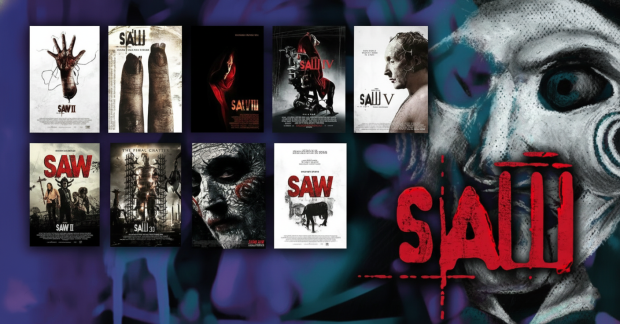
The Complete Saw Franchise Is Now Streaming on Peacock: A Definitive Guide for Horror Fans
Horror fans have a major reason to celebrate. One of the most influential and brutal horror series of the 21st century is now easier than ever to revisit. The entire Saw franchise is officially streaming on Peacock, giving viewers instant access to all ten films in the iconic saga. Whether you’re a longtime fan of Jigsaw’s twisted philosophy or a newcomer ready to experience the traps for the first time, this is the perfect opportunity for a full franchise marathon. This streaming milestone comes on the heels of one of the biggest horror industry stories of recent years: Blumhouse’s acquisition of the Saw franchise in 2025, which reunited original creators James Wan and Leigh Whannell with the property that launched their careers. With renewed creative energy behind the scenes and renewed accessibility on streaming, Saw is once again dominating the […]

‘Weapons’ Massive 2026 Horror Epic Promises to Be the ‘Magnolia’ of Scares
The director of Barbarian returns with Weapons, a star-studded horror film arriving January 16, 2026. If there is one director who currently holds the "golden ticket" in Hollywood horror, it is Zach Cregger. After the massive, unexpected success of Barbarian, Cregger was given carte blanche by New Line Cinema to create his dream project: Weapons. Originally slated for 2025, the film has been positioned as the first major horror event of the new year, hitting theaters on January 16, 2026. Weapons is not just a horror movie; it is being described as an expansive, multi-story epic. Weapons features an incredible ensemble cast, including Josh Brolin (Dune), Julia Garner (Ozark), and Alden Ehrenreich (Oppenheimer). The plot of Weapons is being kept under lock and key, but insiders have compared the structure of the film to Paul Thomas Anderson’s Magnolia—meaning Weapons will […]
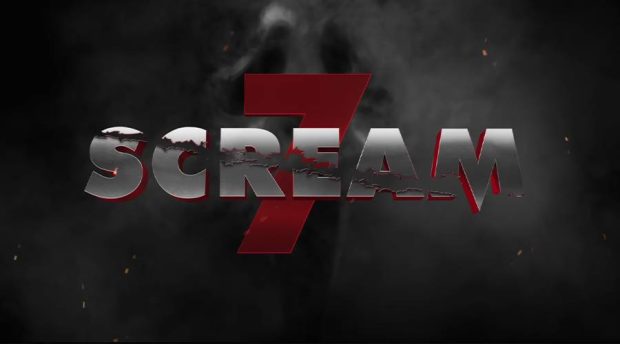
‘Scream 7’ Neve Campbell and Kevin Williamson Reunite to Reclaim the Franchise in February 2026
After a turbulent production history, Scream 7 is finally set to slash its way into theaters on February 27, 2026, bringing the focus back to Sidney Prescott. The horror community can finally exhale: Scream 7 is coming, and it is bringing the franchise back to its roots. Scheduled for a theatrical release on February 27, 2026, Scream 7 marks a pivotal moment for the series. Following the departure of stars Melissa Barrera and Jenna Ortega, Spyglass Media Group has turned to the legacy that started it all. Neve Campbell is officially back as Sidney Prescott, and perhaps even more excitingly, the film is being directed by the man who wrote the original masterpiece: Kevin Williamson. Scream 7 promises to be a direct sequel that refocuses the narrative on Sidney’s survival. For years, fans have wondered if Sidney would ever truly […]
Top 10 Console Games: Horror Games You Must Play in 2026
Top 10 Console Games: Horror Games You Must Play in 2026 From legendary remakes to grotesque new nightmares, prepare your PS5 and Xbox Series X for a golden age of terror. The horror genre is currently enjoying a renaissance. We’ve moved past the era of cheap jump-scare YouTube bait and settled into a rich landscape of psychological dread, complex survival mechanics, and narrative-driven terror. For console gamers, the horizon is looking exceptionally grim—in the best way possible. The next 18 months are stacked with titles designed to make you clutch your controller until your knuckles turn white. We are looking at the return of industry titans, ambitious new IPs from legendary creators, and indie darlings making the leap to the big screen. If you’re ready to lose some sleep, here are the top 10 console horror games coming out soon […]
MADiSON Walkthrough | 2025 Horror Game | 4K 60FPS
The Superscared MADiSON walkthrough will guide you through every terrifying section of the game, showing you where to find crucial items, how to solve each mind-bending puzzle, and where to discover every collectible. the MADiSON walkthrough is broken down into roughly eleven distinct gameplay sections. Each new area cranks up the horror while introducing fresh puzzles that unravel more of this deeply disturbing story. This walkthrough will lead you step-by-step through all the main locations. We'll focus on getting you to the next area, cracking the most perplexing puzzles you'll face, and pointing out every collectible hidden within these creepy halls. Here is the rewritten walkthrough for the "Escaping Luca's House" section of Madison, with all mentions of IGN and related information replaced with "Superscared". Superscared's MADiSON Walkthrough Guide to Escaping Luca's House Welcome to Superscared's guide for […]
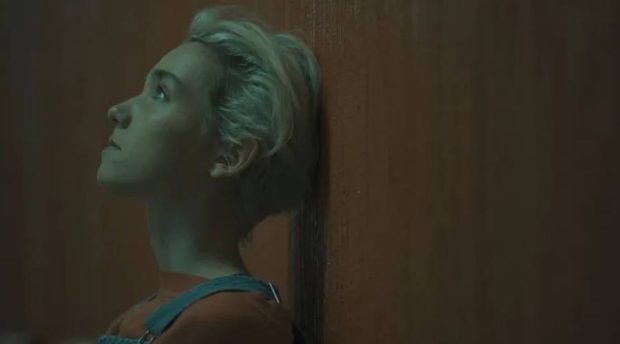
Come True – Critical Movie Review by a Disappointed Viewer
Come True (2025) - A Dreamlike Journey That Drowns in Its Own Lethargy Come True (2025) set out to be a haunting, gripping, and original cinematic experience. Its initial premise—focused on a young woman tormented by strange nightmares—seemed to promise a deep psychological exploration, visually intense and emotionally unsettling. Unfortunately, none of that materializes successfully. What begins as an intriguing introduction ends up being a never-ending parade of repetitive scenes, sluggish pacing, and a storyline that fades into absurdity. From its opening minutes, the film generates genuine expectations. The introduction is well executed: visually striking, well-directed, with a dark, tense atmosphere that suggests something far more compelling is about to unfold. The trailer was also excellent, a testament to the marketing team’s skill in selling the film—even if the film itself fails to deliver on that promise. From that point […]